
What the 30-Day Eco Design Challenge Taught Me About Sustainable Interior Design
10/20/26

What does a truly sustainable, beautiful and healthy bedroom look like? Last year, I put that question to the test in the 30-Day, $30K Eco Design Challenge, and the result was a master bedroom that is warmer, calmer and far healthier for both the people who sleep in it and the planet.
In this post, I’ll tell you about the challenge, how we transformed the room, and what the experience taught me about sustainable interior design, including what it means for your own home.
What Is the 30-Day, 30K Eco Design Challenge?
The 30-Day, 30K Eco Design Challenge is hosted by the Good Future Design Alliance (GFDA). Designers are asked to transform a room, a home or a space in 30 days with a maximum budget of $30,000, guided by three pillars:
- Low waste: keep as much as possible out of the landfill.
- Low toxin: choose materials and finishes that protect indoor air quality and your health.
- Low carbon: favour what already exists and what can be sourced locally, to cut down on transportation and manufacturing.
Together, these three pillars make a simple framework for eco-friendly interior design that any homeowner can use.
The Starting Point: A Cold, Carpeted Master Bedroom
Our project was a master bedroom with a few real problems:
- It got very cold in the winter because of improper insulation
- It had wall-to-wall carpeting that was about 20 years old
- The furniture was MDF
- The layout needed work
A cold room isn’t a cozy room, and we spend so much time in our bedrooms! That makes it one of the most important spaces in the home to get right, both for comfort and for better indoor air quality.
What We Did
Better insulation, with healthier materials. We opened up two walls to reinsulate them properly and chose healthy insulation rather than the default option. The drywall and old insulation that came out were taken to our local ecocenter to be sorted and disposed of properly.
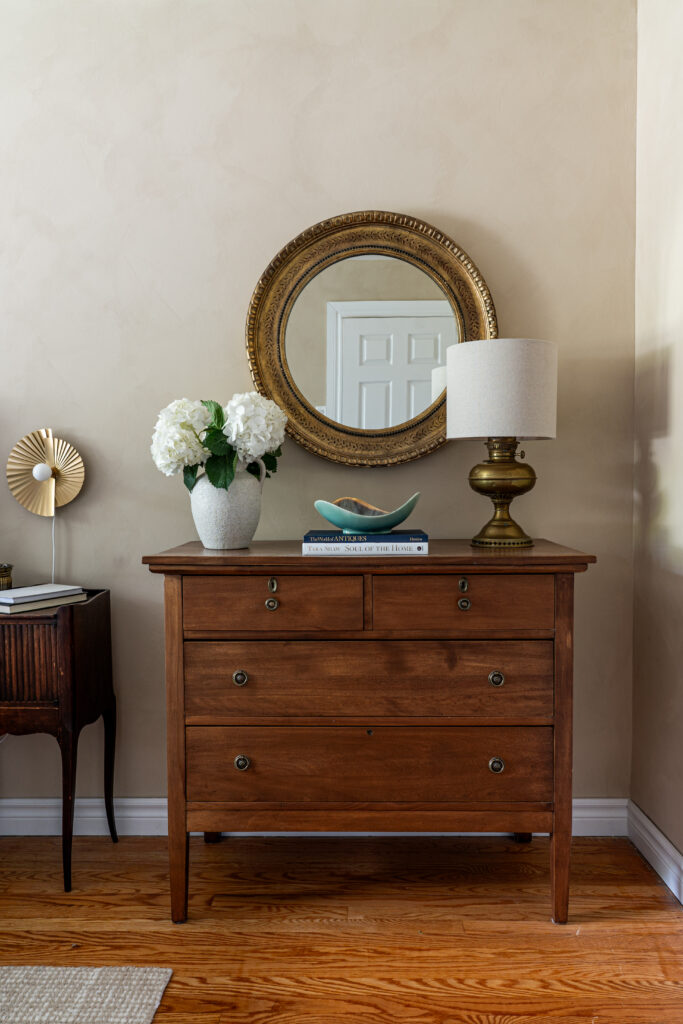
Hardwood floors, brought back to life. Under the wall to wall carpeting were beautiful hardwood floors, so we sanded them down and refinished them with a zero-VOC oil. VOCs (volatile organic compounds) are chemicals that some paints and finishes release into the air, so choosing zero-VOC products helps keep your bedroom air cleaner.
Limewash paint. We painted the walls with a zero-VOC lime wash in a soft beige. It gives the room a gentle, textured, timeless look. One honest trade-off: our lime wash paint supplier is based in Ontario, but the paint is made in Spain. That means more transportation than I would have liked, but it was the best option in the low-tox category.
Pre-loved and antique furniture with character. Buying pre-loved is one of the most effective ways to practise low-carbon, low-waste design. It also gives a home something new furniture rarely can: a story.
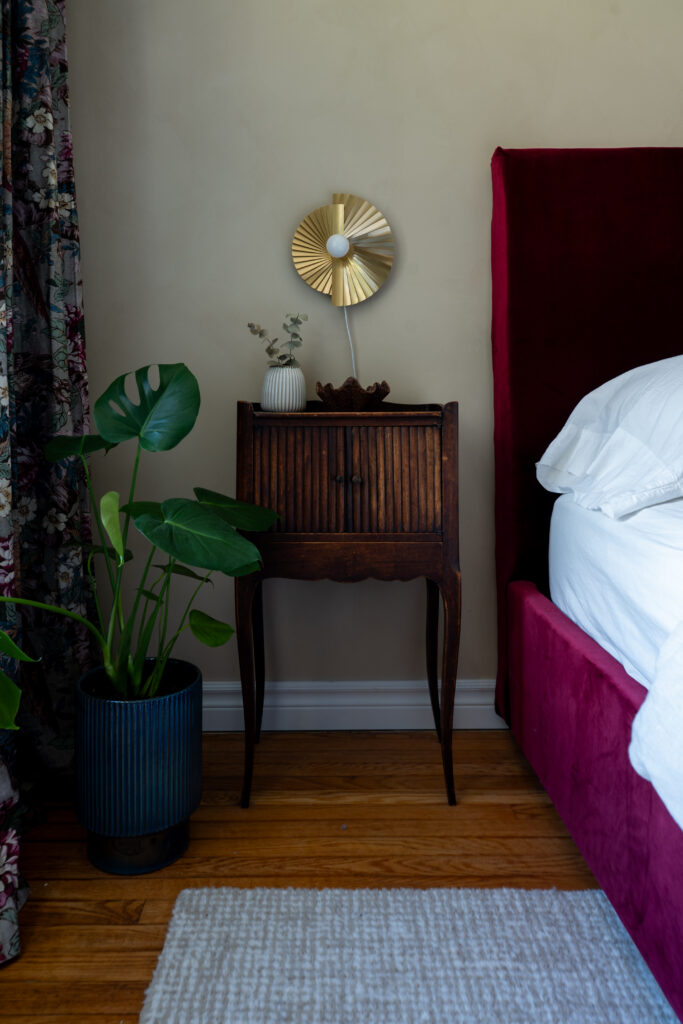
Antique nightstands. I found a pair that literally took my breath away. I had planned to have them sanded down and refinished in a lighter wood tone, but their patina was so gorgeous that we left them exactly as they were. They came from a couple who bought them years ago at an antique store in New Brunswick.
A rescued bed frame. I found the bed frame on Marketplace. Its leather headboard had been destroyed by a cat, but the frame itself was solid, so we had it reupholstered instead of buying new.
An antique dresser and mirror rounded out the room.
A healthier headboard. The old headboard contained polyurethane foam. Swapping it out meant creating some waste, but polyurethane foam can break down over time and may contain chemical flame retardants, which isn’t what you want in the place you sleep. We replaced it with natural organic latex and covered it in a burgundy organic cotton velvet from Two Sisters Eco Textiles. It’s luxurious, rich and cozy. And the old foam didn’t go to the landfill: it was donated and repurposed into cushions for someone else’s project.
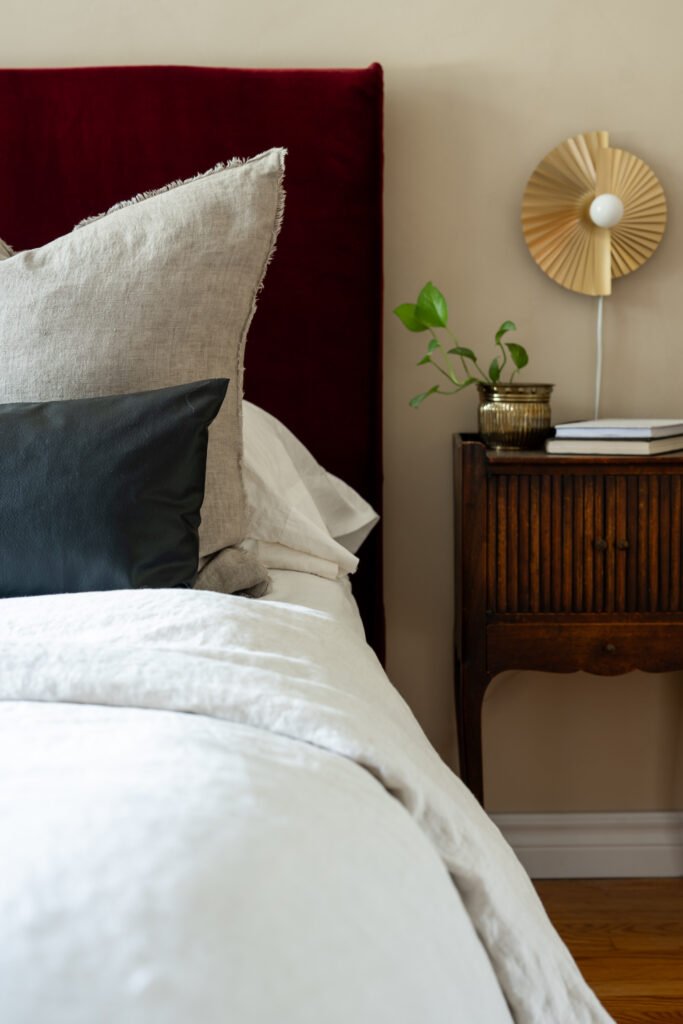
One of a kind lighting, made from waste. We worked with Studio Botté, a Montreal-based company that makes light fixtures from waste, to create custom wall sconces based on their Nari light fixture and they turned out incredible! They are the absolutely the main highlight of the room.
Natural textiles throughout. The finishing touches included:
- a bolster pillow made from apple leather (by Flaura)
- a natural fibre rug
- organic cotton and linen bedding and curtains
How We Kept Waste Out of the Landfill
One of the most rewarding parts of the challenge was tracking everything that left the home:
- The clients’ existing furniture was sold.
- Their old ceiling fan was donated.
- The old polyurethane foam was donated and reused.
- Drywall, insulation and the 20-year old carpet went to the local ecocenter for proper sorting and disposal.
What I Learned (and What It Means for Your Home)
1. Good design takes time, especially when it’s pre-loved. I thought we could finish in 30 days… we didn’t. The concepts were ready and the tradespeople were lined up, but finding the right antique and second-hand pieces takes time and patience. The reward is a room full of character and charm that can’t be replicated.
2. The design will evolve, and that’s a good thing. The finished bedroom didn’t look exactly like my original concept – it actually turned out so much better. When you shop pre-loved, one great find can change everything around it. Staying true to your values sometimes means being flexible with the plan.
3. Measuring makes you accountable. When you have to track and calculate your waste, you find creative ways to give things a second life. If nobody’s counting, it’s far too easy to just toss it in the bin.
4. Healthy materials and finishes matter. Insulation, drywall, furniture and textiles can all impact your home’s air quality and comfort. It’s important to do your research, or work with professionals who know what materials to specify for healthy indoor air.
5. Even an experienced sustainable designer can improve. Having to measure and calculate every element showed me the gaps in my process and where I could source even more sustainably, and I’m bringing those lessons into every new project.
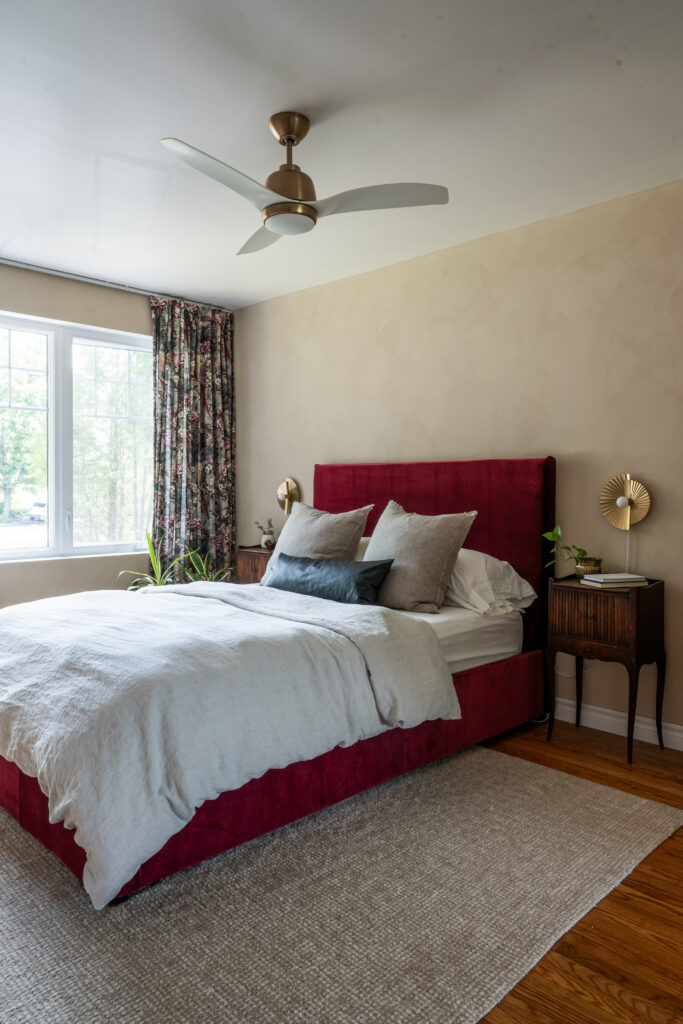
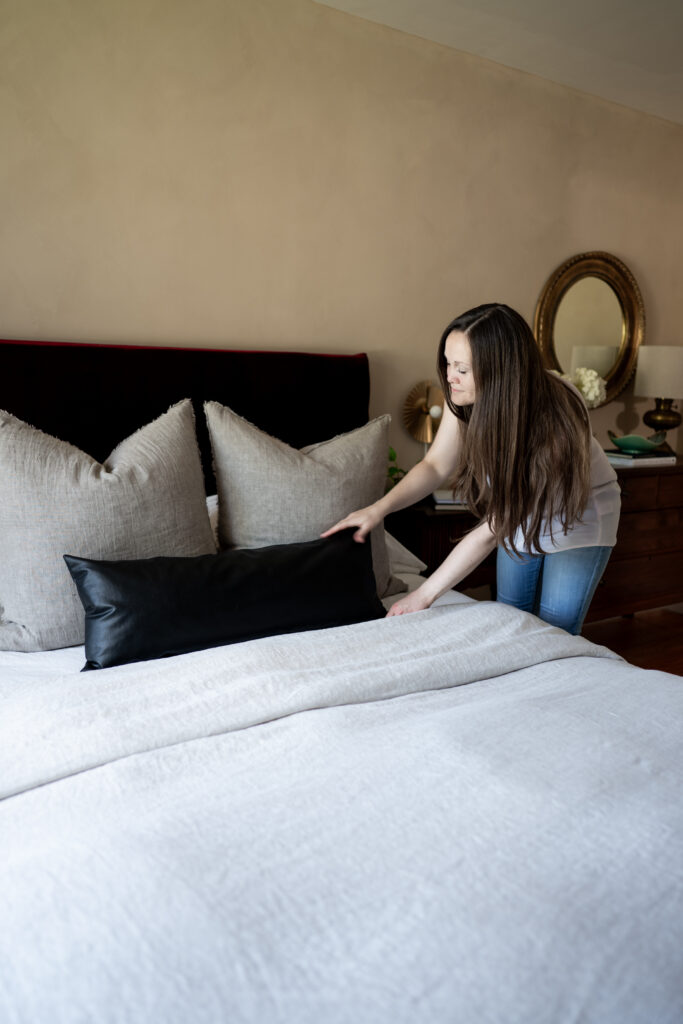
Design @Alex Shield Design | Photography @Catherine Ledoux Photographie
Ready for a Beautiful, Healthy, Eco-Friendly Home?
If you dream of a home that feels cozy, looks beautiful and is kind to your family and the planet, I’d love to help. I’m an interior designer who is passionate about, healthy, sustainable design, and I’ll help you source the right materials, pieces and trades for your space.
Inquire here and we’ll plan a call to discuss your project.
Serving Montreal & North America
